
Doomscrolling at Night: How to Put the Feed Down
It's late, you're exhausted, and the phone is still in your hand for one more video. Here is why doomscrolling grips so hard at night, and how to loosen it before bed.
On this page
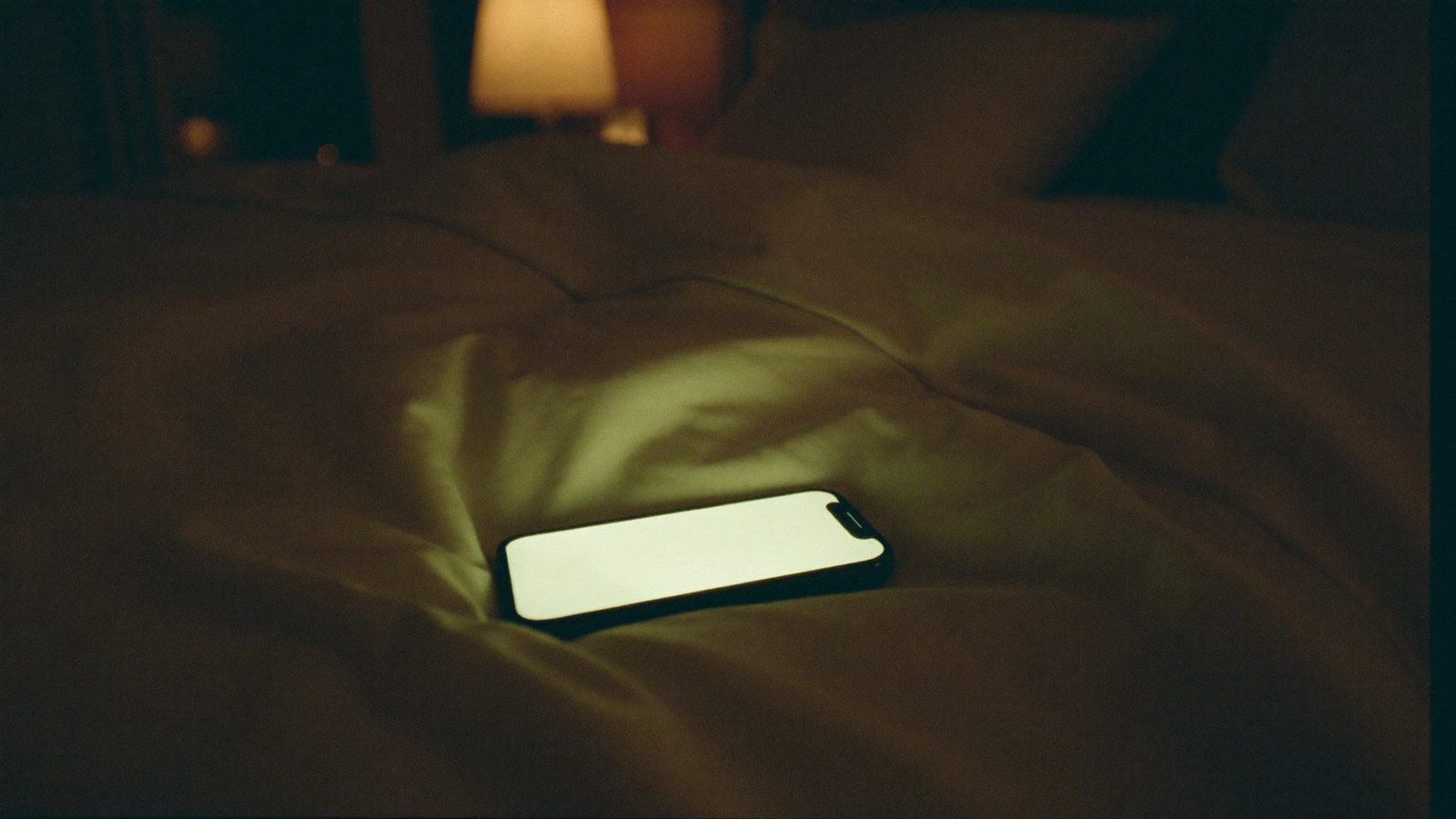
Doomscrolling at night is not really about the news or the videos themselves. It is late, you are exhausted, and your body feels ready for sleep, yet your phone is still in your hand for one more clip, one more scroll, one more quiet moment before the day fully ends. That pull is built into how the apps work and how tired brains respond to small, unpredictable rewards, which is exactly why willpower alone rarely fixes it.
This experience is far more common than most people realize. For a lot of us, nighttime becomes the only part of the day that feels unclaimed. After hours shaped by responsibilities and other people’s expectations, these late moments can feel like the first real chance to just exist.
At InnerSmith, we look at habits like this with curiosity rather than judgment. They are often just a mind and nervous system still asking for something, even after the lights are supposed to be off.
The short version
- Doomscrolling is driven by dopamine and unpredictable rewards, a pattern similar to what keeps people pulling a slot machine.
- Screens signal daytime to your brain, and blue light specifically suppresses the melatonin that helps you wind down.
- Late scrolling is often less about the content and more about reclaiming personal time after a day with none to spare.
- Daily screen use before bed is linked to a meaningfully higher rate of poor sleep quality.
- Small, specific limits, like one no-phone zone or a single tech-free ritual, tend to work better than an all-or-nothing ban.
Why Is Doomscrolling So Hard to Stop?
Doomscrolling is hard to stop because it is not really a willpower problem. Research on scrolling behavior describes a reward pattern built on small, unpredictable hits of dopamine, similar in shape to what keeps people pulling a slot machine. Because the reward is inconsistent rather than guaranteed, the brain keeps seeking just one more scroll to see what shows up next. Over time, that pattern can build a kind of tolerance, so it takes more scrolling to produce the same sense of relief.
Layered on top of that is a basic feature of human attention: we are wired to notice threats and bad news faster than good news. Combine that instinct with an endless feed built to reward attention, and the pull toward scrolling, especially at night when other distractions have quieted down, gets very strong very fast.
What Doomscrolling Does to Your Brain at Night
Harvard Health traces the urge to scroll back to the brain’s limbic system and amygdala, the parts of the brain that scan for threats, which explains why distressing content feels so hard to look away from even when it makes you feel worse. The article notes that stress itself feeds the loop: the more anxious the scrolling makes you, the stronger the urge to keep scrolling becomes.
The effects show up in the body as well as the mind: tension headaches, a tight jaw or shoulders, a racing heart, and disrupted sleep are all named as common consequences. None of this is a personal failing. It is a predictable outcome of stacking a threat-scanning brain on top of an endless, engineered feed late at night.
Does Scrolling Before Bed Ruin Sleep?
It measurably worsens it for a lot of people. In one large study of more than 122,000 adults, daily electronic screen use before bed was linked to a 33 percent higher rate of poor sleep quality compared with no screen use at all, along with several fewer minutes of sleep per night that added up to roughly fifty minutes less sleep across a week. People who naturally prefer later bedtimes felt the effect even more strongly.
Part of the reason is light itself. Harvard-affiliated research comparing blue light to green light exposure found that blue light suppressed melatonin for about twice as long and shifted circadian timing about twice as much. Screens are not the only source of blue light, but they are usually the one still glowing an inch from your face at midnight.
33%
higher rate of poor sleep quality with daily pre-bed screen use
JAMA Network Open, 2025
~3 hrs/day
average time people worldwide spent scrolling social media
Perspectives in Public Health, 2025
2x
how much longer blue light suppressed melatonin compared with green light in one study
Harvard Health, 2024
Why Nights Become Your Only “Me Time”
When days feel tightly structured, your nervous system rarely gets a full chance to settle. You move from task to task, decision to decision, often staying alert long after the working day ends. Late at night, that pressure eases. There are fewer expectations and no immediate demands, and your brain registers this as a moment of safety and autonomy.
Staying awake becomes a way of protecting that space. This is close to what shows up in revenge bedtime procrastination, where sleep gets pushed later on purpose to hold onto a bit of unclaimed time. Seen this way, scrolling late is more a response to feeling overextended during the day than a lack of discipline, and it responds better to small pauses built earlier in the day than to guilt at midnight.
How Do I Stop Doomscrolling at Night?
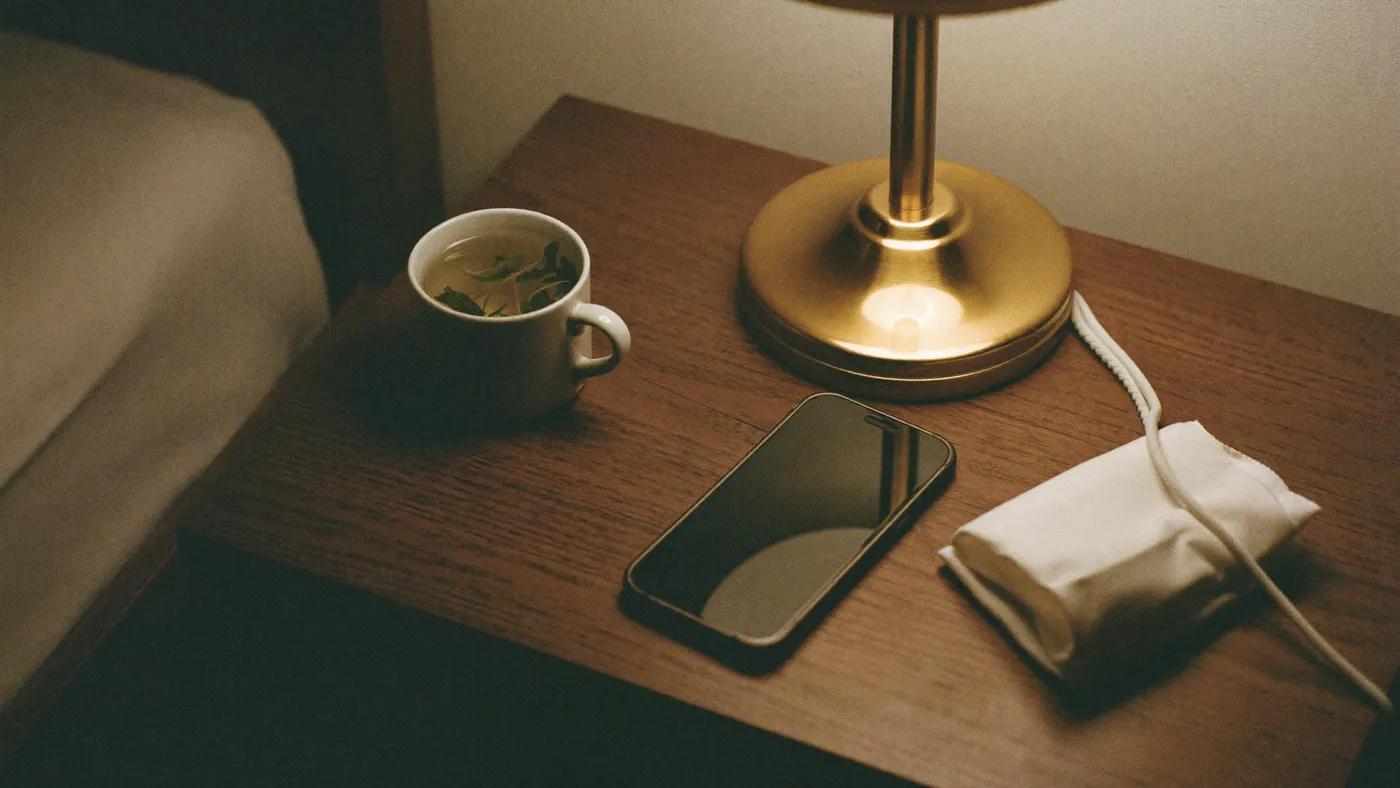
The most workable changes tend to be small and specific rather than sweeping. Set a firm stopping time, like a phone dock outside the bedroom by a set hour, rather than a vague promise to scroll less. Curate what you follow so outrage-driven accounts and constant notifications are not the default; muting or unfollowing a few accounts often does more than any willpower-based rule. Swap the last scroll of the night for one small, calming ritual, warm tea, a few pages of a book, or a short activity that lifts your mood in a gentler way, so there is something to reach for instead of the feed.
It also helps to notice the moment itself. Before reaching for your phone out of habit, a short pause to ask what you are actually feeling, restless, lonely, wound up, can turn an automatic reach into an actual choice.
How InnerSmith Helps
InnerSmith supports evenings like these by offering gentle guidance that respects your pace rather than issuing a strict no-phone rule. Simple sensory grounding prompts, mindful breathing, or noticing the textures around you are an alternative reach for the moments when your hand goes to your phone out of habit rather than real interest. These are the same small, repeatable cues at the center of a good evening wind-down routine.
These small interventions will not undo months of late-night habits overnight, and InnerSmith does not claim they will. It is currently pre-launch, with a waitlist for people who want early access. What it offers instead is a lower-pressure alternative for the exact moment when scrolling has become the default: something that fits your evening rather than demanding you overhaul it.
Frequently Asked Questions
How do I stop doomscrolling at night?
Set a specific stopping point, such as docking your phone outside the bedroom by a set time, and curate your feed so outrage-driven accounts are not the default. Swapping the last scroll for one small ritual, like tea or a few pages of a book, gives you something to reach for instead.
Does scrolling before bed ruin sleep?
It measurably worsens sleep quality for many people. One large study linked daily screen use before bed to a 33 percent higher rate of poor sleep quality, largely because blue light from screens suppresses the melatonin that helps you wind down.
Why is doomscrolling so hard to stop?
Doomscrolling runs on small, unpredictable rewards, a pattern similar to what keeps people playing a slot machine. Combined with the brain’s natural pull toward threat-related content, that unpredictability keeps you seeking just one more scroll.
Is doomscrolling at night a sign of a discipline problem?
Not usually. It is often a response to a day with little unclaimed personal time, closely related to what researchers call revenge bedtime procrastination. Treating it with curiosity rather than guilt tends to work better than willpower alone.
Can InnerSmith help me cut back on late-night scrolling?
InnerSmith offers gentle, low-pressure cues, like breathing prompts or sensory grounding, as an alternative reach for the moments when your hand goes to your phone out of habit. It is currently pre-launch, with a waitlist open for early access.
Sources
- Dopamine-scrolling: a modern public health challenge requiring urgent attention, Perspectives in Public Health, 2025.
- Doomscrolling dangers, Harvard Health Publishing, 2024.
- Electronic Screen Use and Sleep Duration and Timing in Adults, JAMA Network Open, 2025.
- Blue light has a dark side, Harvard Health Publishing, 2024.
Keep reading
All Sleep & Rest →
Why Do I Wake Up at 3am? How to Fall Back Asleep
You wake at the same hour most nights and it doesn't feel random, because it isn't. Here is what is actually happening in your body at 3am, and how to fall back asleep without a fight.
8 min read

Why Can’t I Sleep? When Bedtime Feels Impossible
Tired all day and wide awake at night is a real, common pattern, not a personal failing. Here is why you can't sleep even when exhausted and how to make bedtime feel possible again.
7 min read

How to Relax Before Bed: A Wind-Down That Works
A wind-down is how your body finds out the day is actually over. Here is a realistic, research-backed sequence for how to relax before bed that does not require a perfect routine.
7 min read