
Decision Fatigue: Why Small Choices Feel So Hard
By evening, 'what's for dinner' can feel like a riddle. Here is what decision fatigue is, what the research does and does not show, and a decide-once routine that saves your best thinking for the choices that matter.
On this page
Decision fatigue is the name for a familiar evening: you have handled a hundred choices since breakfast, and now “what’s for dinner” feels like a riddle. Cleveland Clinic describes it as a phenomenon, not a diagnosable medical condition, in which the more decisions you make over a day, the more physically, mentally and emotionally depleted you become.
The science underneath it is more contested than the popular version suggests, so this post, part of our focus and attention collection, is about taking choices off your plate rather than rationing willpower.
The short version
- Decision fatigue describes judgment and self-control wearing down after many choices; Cleveland Clinic calls it a phenomenon rather than a diagnosis.
- Ego depletion, the theory of willpower as a limited resource, looks much weaker than it once did: a preregistered 36-lab test found no significant effect.
- The famous parole-judges study is disputed: critics blamed case order, and the original authors said their result held.
- The fixes are cheap and low-risk: decide once, make important calls earlier, cut trivial choices, take real breaks.
- If every day ends “tired of deciding”, something more chronic may be going on; talk to a doctor or therapist.
What Is Decision Fatigue?
A 2020 concept analysis by nursing researchers at Case Western Reserve University describes decision fatigue as the impaired ability to make decisions and control behavior as a consequence of repeated acts of decision-making. Citing a 2011 New York Times article, the authors say evidence suggests it brings trouble with trade-offs, a preference for a passive role, and choices that seem impulsive or irrational.
The paper also repeats an estimate that an American adult makes 35,000 decisions a day, sourced to a 2016 newspaper article rather than a study, so treat it as a sense of scale.
Cleveland Clinic says a person with decision fatigue struggles with executive functioning, which can impair judgment; signs include procrastination and impulsivity, like the drive-through you usually drive past or spending far too much online. It calls decision fatigue short-lived; daily signs suggest something more chronic may be going on.
Why Do Small Choices Feel Hardest by Evening?
By evening you have made a full day of choices, and a 2020 concept analysis links time of day, sleep deprivation and physical fatigue to decision fatigue. If you cannot decide anything by the end of the day, that can be mental exhaustion from choices; Cleveland Clinic says everyone experiences it from time to time.
The popular explanation, a willpower tank that empties with use, is ego depletion, a 1998 theory of self-control as a limited resource. In 2021, a preregistered project that tested 3,531 people in 36 laboratories, led by Kathleen Vohs and Brandon Schmeichel, found a nonsignificant depletion effect (d = 0.06) in its planned analyses, with the data four times more likely under the no-effect hypothesis.
Earlier estimates ran from 0.62 in a 2010 meta-analysis to 0.04 in a 2016 multi-lab replication, and the authors concluded the effect is likely small, including zero. That does not make your evening exhaustion imaginary; it means the lab case for a willpower tank is weaker than it looked. The team did see a larger effect in people who reported more fatigue, an exploratory result that still needs replicating.
The other pillar is the hungry-judges study. In 2011, researchers analyzed 1,112 rulings by eight Israeli judges sitting on two parole boards: favorable rulings fell from about 65 percent to nearly zero within each session and returned after a food break, which they suggested shows rulings can be swayed by extraneous variables.
A second team reported from interviews that case ordering was not random and that prisoners without lawyers usually went last. In the critics’ own sample of 227 later decisions, unrepresented prisoners won 15 percent of the time against 35 percent with counsel, which they argued would likely explain the decline. The original authors reran their models with representation included and said the meal-break result held, so the study remains disputed.
d = 0.06
the preregistered ego-depletion effect across 36 labs, after planned exclusions; not significant
Psychological Science, 2021
15% vs 35%
parole success for unrepresented prisoners versus those with counsel, in the critics’ own sample of 227 later decisions
Proceedings of the National Academy of Sciences, 2011
So the research does not yet explain the evening effect. Cleveland Clinic points to sleep, citing research that sleep-deprived people have poor impulse control, and to managing stress, which it says can help you feel less overwhelmed by difficult decisions; see our posts on why stress kills your focus and how to reduce stress at work.

How Do You Protect Your Important Decisions?
Treat decision quality as a scheduling problem, not a willpower problem. Put the choices that matter (money, people, anything irreversible) early in your day, or whenever you feel sharpest, not when hungry or straight out of a long meeting. For anything big, try deciding in the morning and acting later, so second thoughts have time to surface.
Separate deciding from doing. A list of the three decisions that need you today, written before you open anything, turns much of the day into carrying out choices already made. Hand off the rest: Cleveland Clinic’s examples are letting the assistant coach decide the starting lineup and your spouse-to-be choose the caterer.
Take real breaks, too: Cleveland Clinic suggests daily downtime, when you don’t have to make decisions, think about things or analyze anything; our post on micro breaks has simple versions.
What Are Simple Ways to Reduce Daily Decision Load?
One simple move is to decide once. Cleveland Clinic’s first prevention tip is to remove choice from parts of your life; as psychotherapist Natacha Duke puts it, some things can be automated. A 2012 paper written for family doctors notes that habits are cognitively efficient, because automating common actions frees mental resources for other tasks; in one study, a self-chosen daily health behavior took an average of 66 days to feel automatic, with wide variation across people. Fill in the template on a Sunday and give its daily parts about ten weeks.
Technique card
- Breakfast and weekday lunch: pick two options each and rotate. Groceries follow the list, not the mood.
- Dinner: a fixed weekly rotation (Monday pasta, Tuesday eggs) with one free night. “What’s for dinner” stops being a 6 p.m. event.
- Clothes: lay out tomorrow’s outfit tonight, or keep a few combinations that always work.
- Mornings: the same sequence every day (water, light, movement, the one important task) so nothing before 9 a.m. needs a decision.
- Small money: standing rules (“under 20, buy it; over 100, wait a day”).
- Evenings: a fixed wind-down and bedtime, because tomorrow’s decisions run on tonight’s sleep.
If every day still ends too tired to decide anything, talk to your primary care doctor or a therapist: Cleveland Clinic notes that indecision every day can come from anxiety, depression, PTSD or burnout. If sleep is part of it, start with our post on why you can’t sleep even when exhausted.
InnerSmith is being built for the evening when one more choice feels like too much. The app asks how your day feels and matches it to one short activity, so that is one choice you do not have to make. It is pre-launch, with a waitlist open for early access.
Frequently Asked Questions
What is decision fatigue?
Decision fatigue is the sense that judgment and self-control wear down after many choices in a day. Cleveland Clinic calls it a phenomenon, not a diagnosis, and a 2020 concept analysis defines it as an impaired ability to make decisions and control behavior after repeated decision-making.
Why do small decisions feel hard at the end of the day?
A 2020 concept analysis links time of day, sleep loss and physical fatigue to decision fatigue, while a preregistered 36-lab test of the willpower-tank idea found no significant effect. Protect sleep, since Cleveland Clinic notes sleep-deprived people have poor impulse control, and make routine choices into defaults.
Why does deciding what to eat for dinner feel exhausting by evening?
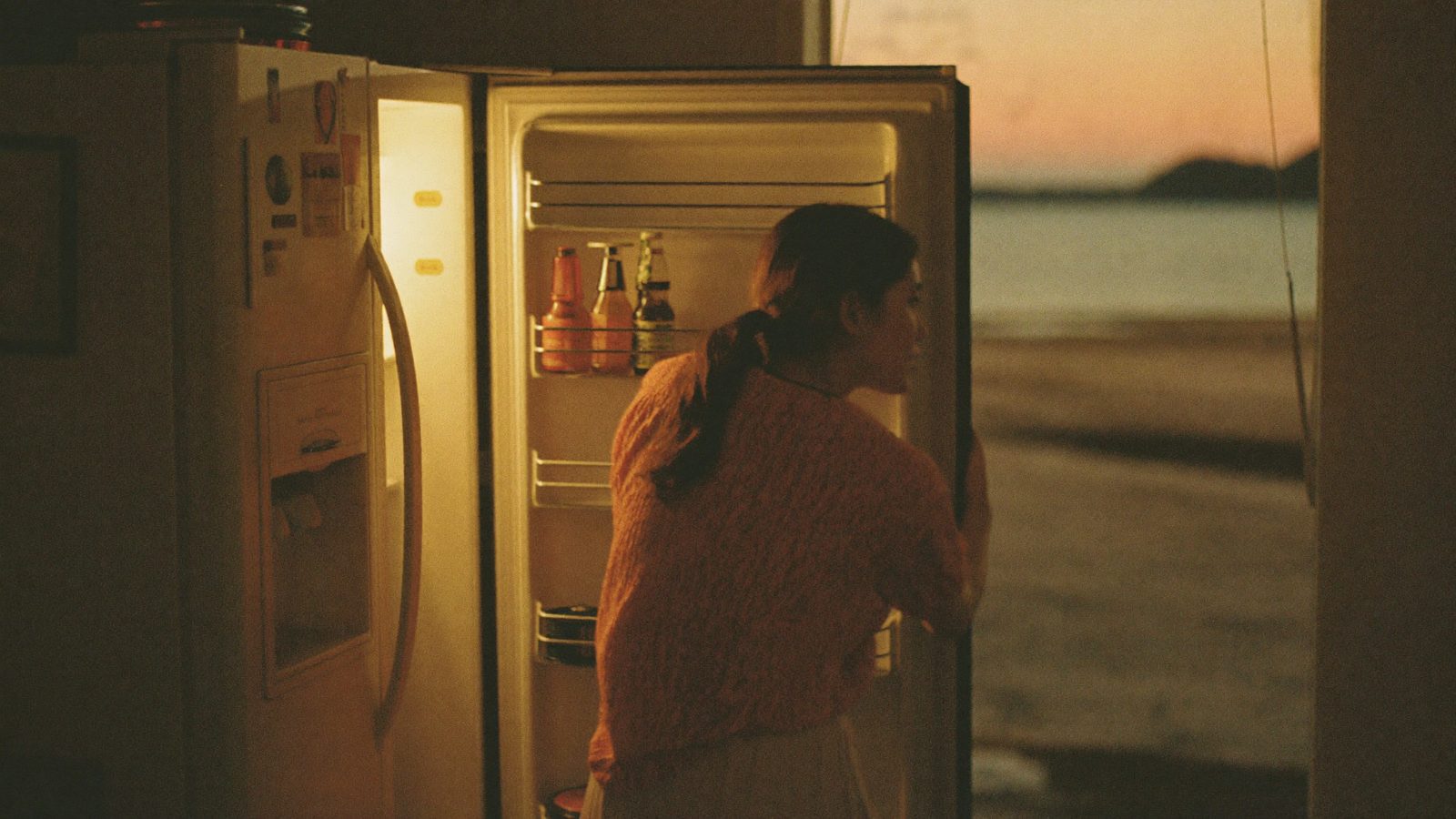
Dinner comes at the end of a full day of choices, and it is open-ended: what to cook, who is eating, what is left in the fridge. A weekly rotation with one free night makes it a default.
Is decision fatigue real?
Yes, as an experience: Cleveland Clinic calls it a phenomenon rather than a diagnosis and says everyone has it from time to time. Its lab theory, ego depletion, is contested, and so is the parole-judges study. The fixes are cheap and low-risk, but none has been tested as a cure.
How do you prevent decision fatigue?
Decide once: set routines for meals, clothes, mornings and small spending. Make important decisions early in the day, separate deciding from doing, take real breaks and protect sleep. If exhaustion and indecision show up every day regardless, talk to a doctor or therapist.
Sources
- 8 Signs of Decision Fatigue and How To Cope, Cleveland Clinic, 2023.
- Decision Fatigue: A Conceptual Analysis, J Health Psychol (via NIH PMC), 2020.
- A Multisite Preregistered Paradigmatic Test of the Ego-Depletion Effect, Psychological Science (via NIH PMC), 2021.
- Extraneous factors in judicial decisions, PNAS (via NIH PMC), 2011.
- Overlooked factors in the analysis of parole decisions, PNAS (via NIH PMC), 2011.
- Reply to Weinshall-Margel and Shapard: Extraneous factors in judicial decisions persist, PNAS (via NIH PMC), 2011.
- Making health habitual: the psychology of ‘habit-formation’ and general practice, Br J Gen Pract (via NIH PMC), 2012.

Written by
Hitansha Bhatia, Business Strategy Associate at InnerSmith (MA Psychology)
Hitansha is a Business Strategy Associate with a deep interest in how people think, feel, and respond in day-to-day life. She holds a Bachelor's and Master's degree in Psychology.
Keep reading
All Focus & Attention →
Digital Distraction: Why You Can’t Put Your Phone Down
Many apps are built to keep you checking. Here is why you can't put your phone down during the working day, what the research does and does not show, and small changes that put a pause between you and the screen.
8 min read

How to Focus When Your Mind Won’t Stop Racing
A racing mind is not a broken mind. It is often attention looping on something unfinished. Here is why the loop crowds out focus, and a three-step technique you can run in two minutes before you start work.
8 min read

Brain Fog: Common Causes and How to Clear It
Brain fog is not a diagnosis, it is a signal. Here are common brain fog causes, from short sleep and stress to medication and thyroid problems, and what helps you think clearly again.
9 min read