
Why You Feel Lonely in a Relationship
You can share a home and a calendar with someone and still feel unseen. Here is why loneliness shows up inside a relationship, and how to start closing the distance.
On this page
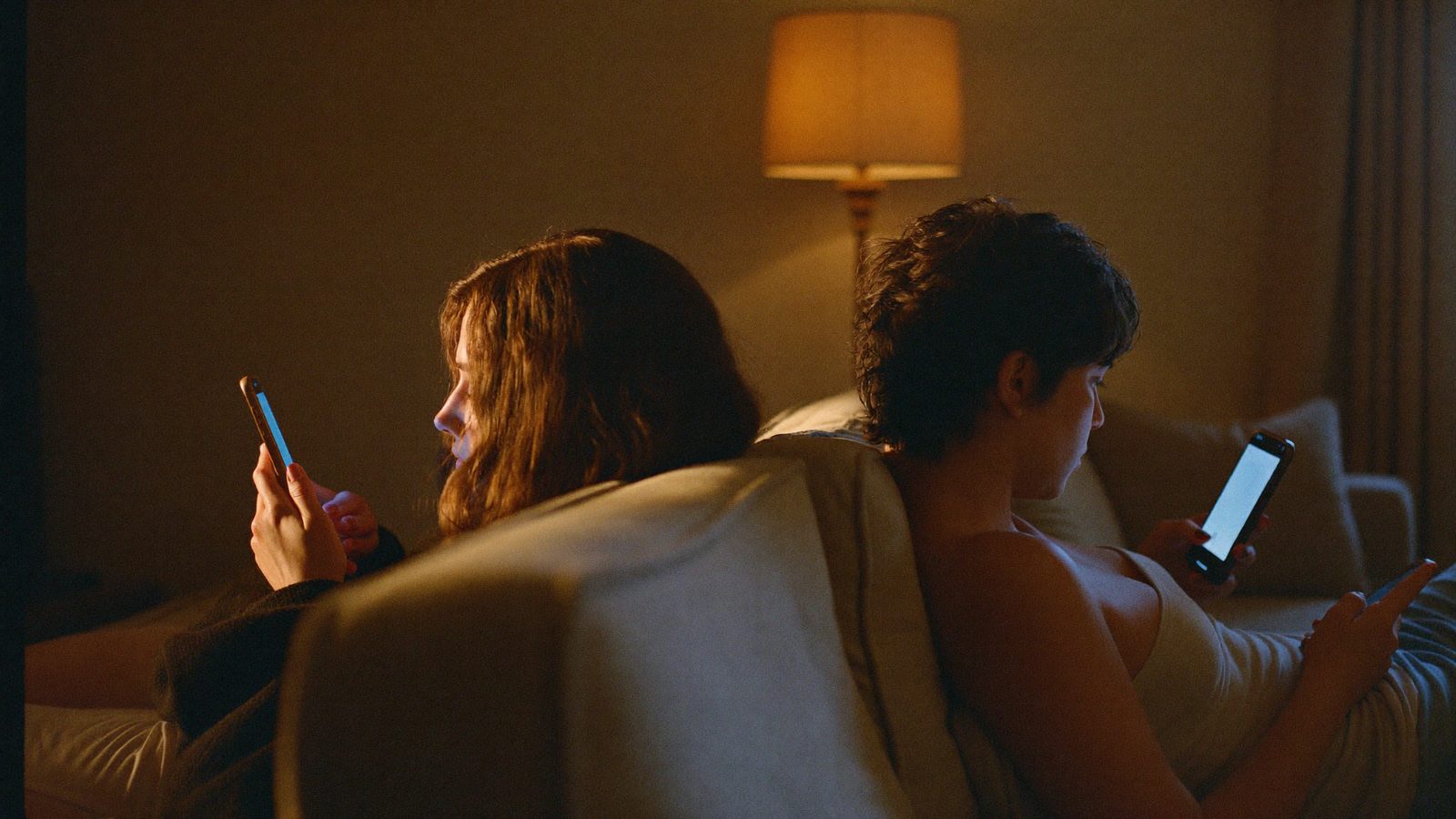
Feeling lonely in a relationship is real, and it does not mean you picked the wrong person or that you are broken. Loneliness tracks the quality of your connection more than the number of people around you, so you can share a home and a calendar with someone and still feel unseen.
The National Institute on Aging puts it plainly: you can live alone and not feel lonely, and “you can feel lonely while being with other people.” If the loneliness reaches well beyond your partner, start with what chronic loneliness does to the mind and body.
The short version
- In a study of 953 older US couples, marriages low in support and high in strain were associated with more loneliness for both partners.
- Feeling understood, validated and cared for, called perceived partner responsiveness, is the core of feeling close.
- Raise it gently: lead with your feeling and a wish, not a list of complaints.
- Start small: something new together has the most study support, while phone-free time and a weekly check-in are our suggestions.
Why Do I Feel Lonely Even in a Relationship?
You can feel lonely in a relationship when your partner is not someone you can confide in, even if they are in the room. One 2018 paper on loneliness in marriage cites earlier research finding that marriage goes with less loneliness only when the partner is a confidant. It describes loneliness as perceived isolation, where relationships feel inadequate “not simply in number but particularly in quality.”
That paper studied 953 older married US couples and found that more than half of the adults rated their marriage as ambivalent, indifferent or aversive rather than simply supportive. Spouses in low-support, high-strain marriages were lonelier, and so were their partners. Wives in indifferent marriages were lonelier too, so no fighting is not the same as closeness. It was a one-time snapshot of older couples, so it shows a link, not a cause.
Researchers call this emotional loneliness in marriage or any romantic relationship. A 2025 paper defines it as “lacking emotional support, intimacy, and meaningful interactions within a romantic relationship.”
1 in 5
older US adults in one study lived in a low-support, high-strain marriage, the type linked with more loneliness for both partners
J Soc Pers Relat, 2018
1.5 hrs
a week of exciting shared activity, the dose in studies that raised relationship satisfaction or quality
Behav Sci review, 2026
What Causes Emotional Distance in a Couple?
Feeling disconnected from your partner has been linked with ordinary things: less support and more strain, attention pulled toward phones, and the slow fade of novelty once a relationship settles.
The older-couples paper notes that withdrawing affection or criticizing can raise a partner’s loneliness, while warmth can lower it, though the evidence on criticism is mixed. It also found that partners’ ratings of the same marriage agreed only slightly more than chance, so your partner may honestly not feel the gap you feel.
The 2025 paper above surveyed 320 adults in Turkey in 2023 and found that being phone-ignored by a partner, often called phubbing, was associated with more emotional loneliness. A one-time survey cannot say which came first, and the authors note that feeling phone-ignored may partly reflect how the ignored partner reads it. If scrolling is how you both unwind, what scrolling really does to mood and connection is worth a look.
Then there is autopilot. A 2026 review of self-expansion research explains that early excitement slows over time, “and thus relationships can become dull.” That is not proof love has gone; it is familiarity with nothing new coming in.
Attachment theory adds one more lens on why the same evening can feel close to one of you and thin to the other. Researchers describe attachment avoidance as discomfort with closeness, and attachment anxiety as chronic fears of rejection. These are patterns on a spectrum, not labels.

How Do You Bring Up Feeling Lonely Without Starting a Fight?
Bring it up as a feeling and a wish, not a charge sheet. Say what you miss, say you want more of it, and ask how things feel from your partner’s side, since partners often see the same relationship differently.
Close-relationship researchers call what you are asking for perceived partner responsiveness, which is close to what people mean by emotional attunement. A 2021 set of couples studies ties intimacy to whether a person “feels understood, validated, and cared for” by their partner. Their scale includes lines like “My partner sees the ‘real’ me,” so the listener’s first job is to show understanding before replying.
Wording we suggest, not a tested formula: “I’ve been missing you lately, even when we’re together. I’m not blaming you. I’d like more time that feels like us. How has it been for you?” Then say back what you heard before you answer. If your partner gets defensive, return to the wish: “I’m telling you because I want more of us, not less.”
How Do You Rebuild Closeness With a Partner?
The habit with the most study support is doing something new together, which several experiments tied to higher relationship satisfaction or quality. Phone-free time and a weekly check-in are our suggestions, and none is a guarantee.
In studies described in the 2026 self-expansion review, couples who spent 1.5 hours or more a week for 10 weeks on exciting activities reported greater relationship satisfaction than couples doing pleasant but not exciting activities or a control group, and a 4-week version raised relationship quality more than a wait-list did. The outcomes were satisfaction and relationship quality, not loneliness. A racing pulse did not seem necessary across studies, so a class or an unfamiliar recipe (our examples) can count. If 90 minutes is out of reach, we suggest 20 minutes of something new to you both.
Novelty is not for everyone, though. In three 21-day diary studies of 390 couples, on days when more avoidant people reported more novelty, their usually lower satisfaction was less low, while for more anxious people, days of familiarity and comfort buffered it instead. The authors suggest “structuring shared time in ways that align with attachment needs.” If one of you craves adventure and the other routine, mix both.
Phone-free time is the simplest habit; the phubbing survey’s authors suggest technology-free zones at home. The check-in below is a set of conversation starters we wrote, not a test or a validated tool.
Technique card
- Set aside 15 minutes once a week, with both phones in another room.
- Each of you finishes the sentence: “One moment this week I felt close to you was…”
- Then: “One moment I missed you, even though we were together, was…”
- The listener says back what they heard before replying: “So it felt like…”
- Each names one small thing that would help next week, like a walk after dinner.
- Close with appreciation: “One thing I’m glad you did this week was…”
If your circle outside the relationship is thin too, how to deal with loneliness and rebuild connection covers that side.
When Is Feeling Lonely in a Relationship a Sign of Something Deeper?
It is worth getting outside support when feeling lonely in a relationship stays heavy for weeks despite honest attempts to reconnect, when one of you will not engage at all, or when you feel unsafe rather than distant.
When to get help
If low mood hangs on for either of you, or you think one of you may be depressed, the National Institute of Mental Health advises talking to a health care provider such as a primary care doctor or psychologist. Depression can look like withdrawal, and a doctor can help tell the two apart. A licensed couples therapist is worth considering when the same conversation keeps going nowhere, or you feel more like roommates than partners. If you or someone you know is having thoughts of suicide, call or text 988 in the US (call 911 in a life-threatening emergency), or contact local emergency services elsewhere.
Distance is not the same as harm. If you feel afraid or controlled, the signs that a relationship has become too heavy are a better place to start.
InnerSmith is being built for evenings like these, when your partner feels further away than the other end of the couch. The app matches a short calming activity to how your day felt, to help you settle before a hard conversation. It is pre-launch, and the waitlist is open.
Frequently Asked Questions
Why do I feel so lonely even though I’m in a relationship?
Loneliness depends more on the quality of your connection than on whether someone is present. If you cannot open up to your partner or rely on them, you can feel alone beside them. Researchers call this emotional loneliness: missing support, intimacy and meaningful interaction inside the relationship.
Is it normal to feel lonely in a relationship?
It happens, and it is not a personal failing. In one study of 953 older US couples, about a fifth of the spouses rated their own marriage as low in support and high in strain, and they were lonelier than spouses who rated theirs supportive.
How do you rebuild closeness with a partner?
Start small: phone-free time, a weekly check-in where each of you shares one real moment and the other reflects it back, and something new together. In one study described in a 2026 review, couples doing exciting activities for 10 weeks reported higher satisfaction than couples doing pleasant but not exciting ones, though in diary studies of 390 couples, anxiously attached partners’ satisfaction held up better on familiar, comfortable days.
Should we see a couples therapist if I feel lonely?
It is worth considering if the loneliness has lasted for weeks, the same conversation keeps going nowhere, or you feel more like roommates than partners. To find a licensed couples therapist, you can ask a primary care doctor for a referral, which is also a good first stop if low mood is part of it.
Sources
- Loneliness and Social Isolation: Tips for Staying Connected, National Institute on Aging, 2024.
- Loneliness in the older adult marriage: Associations with dyadic aversion, indifference, and ambivalence, J Soc Pers Relat (via NIH PMC), 2018.
- How Does Being Phubbed Affect Commitment? Exploring the Roles of Emotional Loneliness and Relationship Satisfaction, J Marital Fam Ther (via NIH PMC), 2025.
- Self-Expansion Activities with a Partner as One Path to Well-Being, Behav Sci (via NIH PMC), 2026.
- Novel and Exciting or Tried and True? Tailoring Shared Relationship Experiences to Insecurely Attached Partners, Soc Psychol Personal Sci (via NIH PMC), 2026.
- Perceived Partner Responsiveness Forecasts Behavioral Intimacy as Measured by Affectionate Touch, Pers Soc Psychol Bull (via NIH PMC), 2021.
- Depression, National Institute of Mental Health, 2024.

Written by
Hitansha Bhatia, Business Strategy Associate at InnerSmith (MA Psychology)
Hitansha is a Business Strategy Associate with a deep interest in how people think, feel, and respond in day-to-day life. She holds a Bachelor's and Master's degree in Psychology.
Keep reading
All Loneliness & Connection →
How to Reconnect With an Old Friend (No Awkwardness)
Reaching out after years of silence feels riskier than it is. Here is what research says about that fear, what to actually send, and how to rebuild a friendship that faded.
7 min read

Parasocial Relationships: Why We Bond With Strangers
Feeling close to a creator you have never met is common, and it has a name. Here is what parasocial bonds can give you, what they cannot, and how to keep them in proportion.
8 min read

How to Make Friends as an Adult (When It Feels Hard)
Adult life often thins out the shared hours and familiar faces that made friendship easy at school. Here is where adults actually meet people, how long friendship takes, and what to do when nerves get in the way.
10 min read